【for English】Regenerative Medicine

At Kita-Aoyama D.CLINIC we provide regenerative therapy using autologous adipose-derived mesenchymal stem cells — cells taken from the patient's own fat tissue, cultured in our two in-house cell processing centers, and returned to the same patient. Between April 2019 and December 2025, 449 patients received 2,212 administrations with no serious adverse events, and these registry results have been peer-reviewed by an international journal. This is private, self-funded medical care; it is not covered by Japanese public health insurance, and it does not guarantee a result.
(Apr 2019 – Dec 2025)
Regenerative Medicine Using Autologous Stem Cells
"Regenerative medicine" is an advanced treatment technology that harnesses the human body's natural regenerative ability. It is currently one of the most innovative and promising techniques in modern medicine. At our clinic, we offer regenerative therapy using autologous mesenchymal stem cells, which are harvested and cultured from the patient's own adipose (fat) tissue. Because these stem cells originate from the patient, the risk of side effects common with drug therapies is considered to be low, and the treatment places little strain on the body.
Our bodies are composed of approximately 37 trillion cells. Among them, around 20 billion cells die each day. However, due to a self-regulatory mechanism known as homeostasis, these cells are continuously replenished through the generation of new ones. At the core of this regenerative process are stem cells.
Stem cells also play a crucial role in repairing and regenerating damaged tissues. Two key properties define stem cells: self-renewal, the ability to replicate themselves, and differentiation, the ability to transform into other types of cells.

Stem cells can be broadly categorized into two groups. The first includes pluripotent stem cells, such as embryonic stem cells (ES cells) and induced pluripotent stem cells (iPS cells), which have the potential to differentiate into virtually any cell type in the body. The second group consists of tissue-specific stem cells, which are found in specific organs or tissues—such as the skin or blood—and function to replace lost or damaged cells within those regions. Examples of tissue-specific stem cells include bone marrow stem cells and adipose-derived stem cells.
Among these, adipose-derived stem cells are particularly notable. Compared to ES or iPS cells, they pose fewer ethical concerns and are considered to carry a lower risk of tumor formation. Furthermore, unlike bone marrow stem cells, adipose-derived stem cells can be harvested with relatively minimal physical burden on the patient.
Once administered, stem cells are known to exhibit a phenomenon called homing, whereby they migrate toward sites of injury. Current scientific understanding, however, holds that homing and differentiation are supportive rather than principal mechanisms, and that the main contribution of mesenchymal stem cells comes from the signalling molecules they secrete (paracrine effects), which support the body's own repair processes through angiogenesis, modulation of inflammation and immune responses, and support of nerve regeneration.

Stem cell therapy holds great promise as an innovative approach for the treatment of intractable diseases. However, it is still considered an emerging field under active investigation. At present, the scientific evidence regarding its safety and efficacy is not yet fully established, and patients should proceed with a thorough understanding of both the potential benefits and associated uncertainties.
Our clinic has submitted 23 Type II Regenerative Medicine Provision Plans covering 15 diseases and conditions to the Ministry of Health, Labour and Welfare, making these treatments accessible for the management of intractable diseases, anti-aging, preventive care, and early intervention.
Requirements for Providing Regenerative Medicine
In Japan, regenerative medicine is regulated under the "Act on the Safety of Regenerative Medicine." The following steps are required to provide regenerative therapy using stem cells:
- Create a Type II Regenerative Medicine Provision Plan.
- Obtain review and approval from a Certified Special Committee for Regenerative Medicine regarding the safety and validity of the plan.
- Submit the treatment plan to the Ministry of Health, Labour and Welfare (MHLW).
- Receive MHLW review and acceptance.
- Publicly list the facility as a provider of regenerative medicine.
Our clinic follows these procedures and has been authorized to provide Type II regenerative medicine, specifically adipose-derived mesenchymal stem cell therapy. We established our own Certified Special Committee for Regenerative Medicine (committee number NA8170004) in 2018, and currently have 23 provision plans covering 15 diseases and conditions on file with the MHLW. All submitted plans can be checked by anyone on the MHLW website. Notification means that a plan has passed committee review; it is not a confirmation of efficacy.
Treatment Features
【1】This therapy may improve functional decline or disorders that are difficult to treat with standard medical care.
It is applicable to the following 15 diseases and conditions (see Indications for Regenerative Medicine for details). Eligibility is always determined through medical examination.
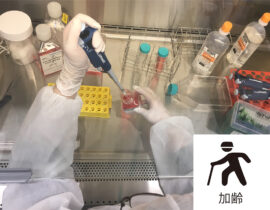
- Age-related physical and physiological decline
- Musculoskeletal injuries (e.g., sports-related)
- Arteriosclerosis (e.g., heart attack, stroke)
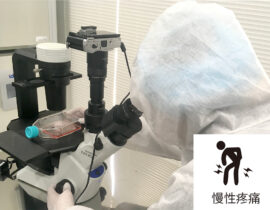
- Chronic pain
- Cognitive decline
- Neurodegenerative diseases
- Chronic pulmonary diseases
- Heart failure
- Chronic kidney disease
- Liver dysfunction (cirrhosis, fibrosis)
- Inflammatory bowel disease
- Aneurysms
- Diabetes
- Infertility
- Alopecia (hair loss)
【2】By using the patient's own stem cells, this therapy avoids rejection and ethical concerns.
We use adipose-derived tissue stem cells, which are:
- Easy to harvest from subcutaneous fat
- Highly applicable for treatment (strong proliferative ability with minimal aging effects)
- Free from the risk of rejection, since the cells are autologous
- Free of the ethical concerns associated with embryonic stem cells (ES cells)
We extract a small amount of fat (about the size of two rice grains) from the abdomen under local anesthesia. These are then processed in our on-site Cell Processing Centers (CPC), where the stem cells are isolated, cultured, and later administered via IV, arterial catheter, intrathecal injection, or localized injection. The treatment is minimally invasive and typically performed on an outpatient basis.
At the same time, this therapy has limits. Responses vary between individuals, and improvement cannot be expected in every patient. Most cells given by intravenous drip are captured in the capillaries of the lungs and disappear within several days.
【3】Unlike iPS or ES cell-based treatments, our method is considered to carry a low risk of tumor formation.
【4】Treatment is available to patients aged 18 and older who do not have infectious diseases such as HIV, HCV, HBV, HTLV, or syphilis.
Treatment Process

- Initial Consultation (Foreign patients are asked to bring an interpreter.)
Includes counseling and treatment explanation. If you wish to proceed, you'll complete a consent form and undergo blood tests and other assessments. - Fat Harvesting and Blood Collection
A small amount of fat is collected from the abdomen under local anesthesia (requires a few millimeters of incision). When autologous serum medium is used, blood is also drawn at the same visit to prepare the serum required for culture. - Cell Culturing
Harvested fat is processed and cultured in our on-site CPC. Our standard is a maximum of 3 to 4 weeks of culture and no more than 3 to 5 passages. Cultured cells are cryopreserved at -196°C for future use if needed. - Cell Administration
Administered via IV drip, arterial catheter, intrathecal injection, or local injection, depending on the treatment needs. Intrathecal delivery is used for neurodegenerative conditions. Follow-up treatments are possible using the stored frozen cells. - Follow-up
Patients are assessed at 1, 3, 6, and 12 months after administration, and the results are compiled in our treatment registry.

▲Cell processing conducted by a cell culturist in a biosafety cabinet

▲Adipose-derived stem cells cultured from isolated cells
Our clinic operates two in-house cell processing facilities: the CPC on the 6th floor of the clinic (facility number FC3210045) and the ARK WISE Cell Processing Facility in the adjacent building (facility number FA3250001), licensed in September 2025. Because culturing is performed in-house rather than outsourced, there is almost no time loss between tissue harvesting and cell isolation, or between the recovery of cultured cells and administration.
Our Cell Quality Standards
Guaranteeing a fixed number of cells requires additional passages and a longer culture period whenever the yield from a patient's tissue is low. Repeatedly passaged mesenchymal stem cells have been reported to lose their immunomodulatory capacity, and an analysis of clinical trials suggests that there is an optimal intravenous dose rather than a "more is better" relationship. For these reasons, we do not guarantee a specific cell count. Instead, we keep to the following standards and report the number actually administered.
| Passages | Within 3 to 5 |
|---|---|
| Culture period | Within 3 to 4 weeks |
| Number of cells administered | 50 million to 200 million (7-year average: approx. 115 million per administration) |
| Where cells are cultured | Two in-house CPCs with resident cell culture technologists (no transport of cells) |
Culture validity is confirmed using positive and negative surface markers characteristic of mesenchymal stem cells, analysed quantitatively by flow cytometry when medically indicated or at the patient's request.
Treatment Results and Safety Data
Between April 2019 and December 2025, 449 patients (247 men, 202 women; mean age 61.5 years, range 18–92) received a total of 2,212 administrations at our clinic, with a cumulative follow-up of 553.5 person-years. The follow-up rate was 90.9% (408/449). Patients received an average of 4.9 administrations, and 68.2% received three or more.
Administration Routes
| Route | Administrations | Patients |
|---|---|---|
| Intravenous drip only | 1,380 | 345 |
| Intravenous drip + local injection | 454 | 134 |
| Intrathecal | 178 | 53 |
| Intravenous drip + intrathecal | 120 | 50 |
| Arterial catheter | 25 | 9 |
| Intravenous drip + intrathecal + local injection | 15 | 3 |
| Other combinations | 40 | — |
| Total | 2,212 | 449 |
Approximately 89% of sessions included intravenous administration, with 5,000 units of heparin given as prophylaxis.
Adverse Events
| Adverse event | Grade (CTCAE) | Events | Patients (%) |
|---|---|---|---|
| Fever | Grade 1 (rise of less than 2°C) | 25 | 24 (5.3%) |
| Fever | Grade 2 (rise of 2°C or more) | 1 | 1 (0.2%) |
| Elevated blood pressure | 20–40 mmHg | 77 | 63 (14.0%) |
| Elevated blood pressure | 40 mmHg or more | 6 | 6 (1.3%) |
| Reduced SpO₂ | Mild, transient | 2 | 2 (0.4%) |
| Serious adverse events (SAE) | — | 0 | 0 (0%) |
All adverse events were transient and resolved without intervention. No treatment was discontinued, and there were no cases of thromboembolism, hospitalisation, or treatment-related death. The upper limit of the 95% confidence interval for serious adverse events is 0.14% per administration.
Zero serious adverse events in 2,212 administrations is an observation, not a guarantee that the risk is zero. These are single-centre observational data without a control group and therefore do not demonstrate efficacy. Outcomes for the 9.1% of patients lost to follow-up are not included.
Peer Review
These registry results have undergone third-party peer review and have been accepted by the international journal Stem Cell Research & Therapy (Springer Nature / BMC, open access). The article is currently available as an Article in Press (DOI: 10.1186/s13287-026-05213-z).
Case Reports
The following are reports of individual patients treated at our clinic. They are examples of individual courses, not evidence of efficacy, and the same outcome cannot be expected in other patients.
Case 1: Male in his 60s with Lewy Body Dementia
Diagnosed at a university hospital and treated with standard medications, with cognitive decline continuing. Following two stem cell administrations, a rise in his MMSE score and a reduction in sleep disturbance were recorded within one month. He has chosen to continue treatment.
Case 3: Female in her 80s with Arteriosclerosis and Chronic Elbow Pain
She consulted us for knee pain and was also found to have arteriosclerosis. After two administrations, a decrease in carotid plaque thickness was measured. After three further administrations, a reduction in her knee pain was recorded.
The costs, risks, and regulatory status of the treatment described in these reports are set out in "Treatment Costs", "Possible Complications, Risks, and Side Effects", and "Important Information About This Treatment" on this page.
Treatment Costs
- Regenerative stem cell therapy is not covered by insurance and is provided as private medical care (full out-of-pocket payment).
- Treatment fees may vary between clinics due to its classification under private medical practice, despite being regulated by the MHLW.
- Our clinic maintains two in-house cell processing facilities, ensuring prompt and safe cell administration without degradation.
- We also offer long-term storage solutions for repeated treatments.
- There is no additional charge for the choice or combination of administration routes (IV drip, local injection, arterial catheter, intrathecal injection, C-arm guided local injection), or for the number of treated sites.
Consultation and Examination
| Counseling | ¥5,000 (¥5,500 incl. tax) |
|---|---|
| Blood test | ¥20,000 (¥22,000 incl. tax) |
With Serum-Containing Medium (autologous serum)
| Fat harvest + cell culturing & administration (initial treatment) | ¥1,500,000 (¥1,650,000 incl. tax) |
|---|---|
| Administration of stored cultured cells | ¥750,000–¥1,000,000 (¥825,000–¥1,100,000 incl. tax) |
With Serum-Free Medium
| Fat harvest + cell culturing & administration (initial treatment) | ¥2,000,000 (¥2,200,000 incl. tax) |
|---|---|
| Administration of stored cultured cells | ¥1,000,000–¥1,500,000 (¥1,100,000–¥1,650,000 incl. tax) |
Cell Storage
| Long-term storage (no fee is charged while treatment is ongoing) | ¥200,000 (¥220,000 incl. tax) per year |
|---|

▲Cell Storage

▲Cell Processing Center (CPC)
Possible Complications, Risks, and Side Effects
- Blood draw: Pain at puncture site, bruising, nerve damage
- Fat harvesting: Pain, infection, bruising, hardening, pigmentation
- Cell culturing: Delayed growth, contamination
- Cell administration: Injection site pain, burning sensation, fever, elevated blood pressure, chills, nausea, respiratory symptoms (e.g., thrombosis)
- Post-treatment: Delayed symptom improvement or insufficient therapeutic effect
Observed frequencies at our clinic are given in "Treatment Results and Safety Data" above.
Stem Cell Secretome Therapy (Cell Culture Supernatant)
Cell culture supernatant is the liquid that remains after stem cells have been cultured. It contains no cells, only what the cells have secreted — growth factors, cytokines, exosomes and other extracellular vesicles. These secreted components are collectively called the stem cell secretome, and treatment using them is referred to at our clinic as stem cell secretome therapy. If the main action of stem cell therapy is paracrine signalling, the idea behind secretome therapy is to deliver those signals directly.
Regulatory Status
Because it contains no cells, cell culture supernatant falls outside the scope of the Act on the Safety of Regenerative Medicine under current Japanese law, and treatment using it is therefore not subject to the notification system described above. The Ministry of Health, Labour and Welfare has stated that no pharmaceutical product using such material has obtained marketing approval on the basis of demonstrated efficacy and safety, in Japan or overseas. In 2026 a government working group began discussing whether this field should be brought under regulation. Our clinic supports stronger regulation, and will follow any framework that is established.
What We Use
The material we use is allogeneic — derived from donors other than the patient. We do not administer products of unverified origin sold as "reagents".
| Origin of the cells | Allogeneic (donor-derived) |
|---|---|
| Source tissues | Dental pulp, adipose tissue, umbilical cord |
| Manufacturer | GMP-compliant cell processing centers in Japan, and research laboratories attached to university hospitals |
| Donor screening | Only donor cells that have passed eligibility assessment, including testing for hepatitis B, hepatitis C, HIV and syphilis. Donor information is recorded and managed. |
| Importation | Not obtained through personal importation |
Advantages and Limitations
| Advantages of its nature | Limitations |
|---|---|
| Contains no cells, so there is no concern about immune rejection or vascular obstruction | Cannot adjust its output in response to conditions in the body |
| Easy to store and handle | Has no capacity to differentiate |
| Can be used repeatedly | Short half-life, so repeated or higher doses may be required |
| — | Allogeneic (donor-derived), requiring donor screening and infection control |
We position autologous stem cell therapy as our principal treatment and secretome therapy as a complementary option; it is not a substitute for stem cell therapy. Neither its efficacy nor its safety has been established, and we cannot state that this treatment is effective.
Administration and Costs
We administer the secretome by intravenous drip, local injection, or transdermal delivery by electroporation. An intranasal preparation is also available. Which method is appropriate depends on the condition, the goal of treatment, and safety requirements, and is decided at consultation.
Fees depend on the source tissue and on the number of vials used in one session. There is no difference in price between routes of administration (intravenous drip, local injection, or electroporation), and the fee covers both the preparation and the procedure. This treatment is private, self-funded medical care and is not covered by Japanese public health insurance.
| Source tissue | 1 vial | 3 vials | 5 vials | 10 vials |
|---|---|---|---|---|
| Dental pulp | ¥30,000 (¥33,000 incl. tax) |
¥85,500 (¥94,050 incl. tax) |
¥138,750 (¥152,625 incl. tax) |
¥270,000 (¥297,000 incl. tax) |
| Adipose tissue | ¥50,000 (¥55,000 incl. tax) |
¥142,500 (¥156,750 incl. tax) |
¥231,250 (¥254,375 incl. tax) |
¥450,000 (¥495,000 incl. tax) |
| Umbilical cord | ¥70,000 (¥77,000 incl. tax) |
¥199,500 (¥219,450 incl. tax) |
¥323,750 (¥356,125 incl. tax) |
¥630,000 (¥693,000 incl. tax) |
| Intranasal preparation (adipose-derived) | 1 bottle | 5 bottles | 10 bottles |
|---|---|---|---|
| Fee | ¥45,000 (¥49,500 incl. tax) |
¥213,750 (¥235,125 incl. tax) |
¥405,000 (¥445,500 incl. tax) |
For the current fee list, please see the stem cell secretome (exosome-containing solution) fee list (separate site, in Japanese, opens in a new tab).
Risks and Limitations
- Theoretical risk of infection transmission associated with allogeneic products
- Allergic reactions
- Pain or swelling at the site of administration
- Fever
Neither the efficacy nor the safety of this treatment has been established. Because it uses an unapproved product, it is not eligible for Japan's public relief systems such as the Relief System for Sufferers from Adverse Drug Reactions. Eligibility is determined at consultation.
Frequently Asked Questions
- Is this treatment covered by insurance?
- No. Stem cell therapy and stem cell secretome therapy are private (self-funded) medical care and are not covered by Japanese public health insurance.
- How many cells are administered?
- Between 50 million and 200 million, with a 7-year average of approximately 115 million per administration. This is the number that results from keeping within our standards of 3 to 5 passages and 3 to 4 weeks of culture; we do not guarantee a specific cell count.
- How often, and how many times, is treatment given?
- This depends on the condition and the goal of treatment. At our clinic, patients received an average of 4.9 administrations and 68.2% received three or more. Please discuss this at your consultation.
- What are the side effects?
- Bruising, pain, and infection at the fat harvesting site, and fever, elevated blood pressure, and chills at the time of administration. No serious adverse events were reported in 2,212 administrations at our clinic, but this does not mean that the risk is zero.
- Does a notified clinic mean the treatment is safe and effective?
- Notification shows that a provision plan has passed review by a certified committee. It is not proof of efficacy. We recommend also checking whether a clinic discloses its results and safety data in figures, and whether those data have been reviewed by a third party.
- Is stem cell secretome therapy the same as stem cell therapy?
- No. Cell culture supernatant contains no cells, so it is not covered by the Act on the Safety of Regenerative Medicine and is not an approved pharmaceutical product. We position it as a complementary option, not a substitute for stem cell therapy.
- How much does stem cell secretome therapy cost?
- Fees depend on the source tissue (dental pulp, adipose tissue, or umbilical cord) and on the number of vials used in one session, ranging from ¥33,000 to ¥693,000 including tax. There is no difference in price between routes of administration. It is private, self-funded medical care and is not covered by Japanese public health insurance.
- Can I receive treatment if I live outside Japan?
- Yes. Please note that an interpreter is required for consultations, and that the treatment requires at least two visits to Japan, since cell culture takes 3 to 4 weeks between fat harvesting and administration.
Contact Information
Kita-Aoyama D. Clinic
(7-minute walk from Omotesando Station, 5-minute walk from Gaienmae Station)
3-7-10 Jingumae, Shibuya-ku, Tokyo, ARK WISE BLDG.
TEL: 03-5411-3555
(Mon–Sat: 9:30–18:00)
Important Information About This Treatment
- Treatment: Autologous adipose-derived mesenchymal stem cell therapy (cells isolated and cultured from the patient's own adipose tissue and administered to the same patient). This is private, self-funded medical care and is not covered by Japanese public health insurance.
- Regulatory status: Provided under Type II Regenerative Medicine Provision Plans reviewed by the Kita-Aoyama D Clinic Certified Special Committee for Regenerative Medicine (NA8170004) and submitted to the Ministry of Health, Labour and Welfare in accordance with the Act on the Safety of Regenerative Medicine. The cells used are not an approved pharmaceutical product or regenerative medical product under the Pharmaceuticals and Medical Devices Act.
- Source of the cells: Cells are manufactured at our own licensed cell processing facilities (facility numbers FC3210045 and FA3250001) in accordance with the Act on the Safety of Regenerative Medicine. There is no approved domestic pharmaceutical product for the same indications (with the exception of certain specific indications such as severe meniscal injury). Clinical application is advancing in many countries, but broad approval in major jurisdictions has not been established.
- Public relief systems (stem cell therapy): Because the treatment uses an unapproved product and is provided as private medical care, it is not eligible for Japan's public relief systems such as the Relief System for Sufferers from Adverse Drug Reactions.
- Stem cell secretome therapy — treatment and regulatory status: Administration of stem cell culture supernatant (stem cell secretome). It is private, self-funded medical care. The product is not an approved pharmaceutical product or medical device under the Pharmaceuticals and Medical Devices Act, and because it contains no cells it is also outside the notification system of the Act on the Safety of Regenerative Medicine (as of 2026). There is no approved domestic product with the same composition or performance. The MHLW has stated that no product has obtained marketing approval on the basis of demonstrated efficacy and safety, in Japan or overseas (notification of 31 July 2024). It is not eligible for Japan's public relief systems.
- Stem cell secretome therapy — source: Manufactured at GMP-compliant cell processing centers in Japan and at research laboratories attached to university hospitals. Source tissues are umbilical cord, adipose tissue, and dental pulp. Only donor cells that have passed eligibility assessment, including testing for hepatitis B, hepatitis C, HIV and syphilis, are used, and donor information is recorded and managed. The material is not obtained through personal importation.
- Stem cell secretome therapy — costs: Dental pulp: 1 vial ¥30,000 (¥33,000 incl. tax) / 3 vials ¥85,500 (¥94,050 incl. tax) / 5 vials ¥138,750 (¥152,625 incl. tax) / 10 vials ¥270,000 (¥297,000 incl. tax). Adipose tissue: 1 vial ¥50,000 (¥55,000 incl. tax) / 3 vials ¥142,500 (¥156,750 incl. tax) / 5 vials ¥231,250 (¥254,375 incl. tax) / 10 vials ¥450,000 (¥495,000 incl. tax). Umbilical cord: 1 vial ¥70,000 (¥77,000 incl. tax) / 3 vials ¥199,500 (¥219,450 incl. tax) / 5 vials ¥323,750 (¥356,125 incl. tax) / 10 vials ¥630,000 (¥693,000 incl. tax). Intranasal preparation (adipose-derived): 1 bottle ¥45,000 (¥49,500 incl. tax) / 5 bottles ¥213,750 (¥235,125 incl. tax) / 10 bottles ¥405,000 (¥445,500 incl. tax). Fees include the preparation and the procedure; there is no additional charge for the route of administration (intravenous drip, local injection, or electroporation).
- Stem cell secretome therapy — main risks and side effects: Theoretical risk of infection transmission associated with allogeneic products, allergic reactions, pain or swelling at the site of administration, and fever. Neither efficacy nor safety has been established.
- Costs: Counseling ¥5,000 (¥5,500 incl. tax); blood test ¥20,000 (¥22,000 incl. tax); initial treatment ¥1,500,000 (¥1,650,000 incl. tax) with autologous serum medium or ¥2,000,000 (¥2,200,000 incl. tax) with serum-free medium; administration of stored cultured cells ¥750,000–¥1,000,000 (¥825,000–¥1,100,000 incl. tax) or ¥1,000,000–¥1,500,000 (¥1,100,000–¥1,650,000 incl. tax) respectively; long-term storage ¥200,000 (¥220,000 incl. tax) per year, waived while treatment is ongoing. There is no additional charge for the administration route or the number of treated sites. Fees for stem cell secretome therapy are listed in that section.
- Main risks and side effects: Bruising, pain, and infection at the fat harvesting site; fever, elevated blood pressure, and chills at the time of administration; and, as a serious risk of intravascular administration, pulmonary thromboembolism. No serious adverse events have been reported in 2,212 administrations at our clinic, but this does not mean that the risk is zero.
- No guarantee of results: This page does not guarantee the effect of treatment. Eligibility, response, and risk vary between individuals. Please make your decision after a medical examination and a full explanation from a physician.